

Why Should Learning Stay Seated?
Let me ask you a simple question.
Why do we expect children to sit in the same place for 40 minutes and remain fully engaged?
As adults, we struggle to sit through long meetings.
Yet we expect children, who are naturally energetic and curious, to learn best while sitting still.
Perhaps the problem is not with the children.
Perhaps the problem is with the way we design learning.
What if students could move, observe, discuss, think, and learn at the same time?
This is the beauty of a powerful active learning strategy called Gallery Walk.
What Is a Gallery Walk?
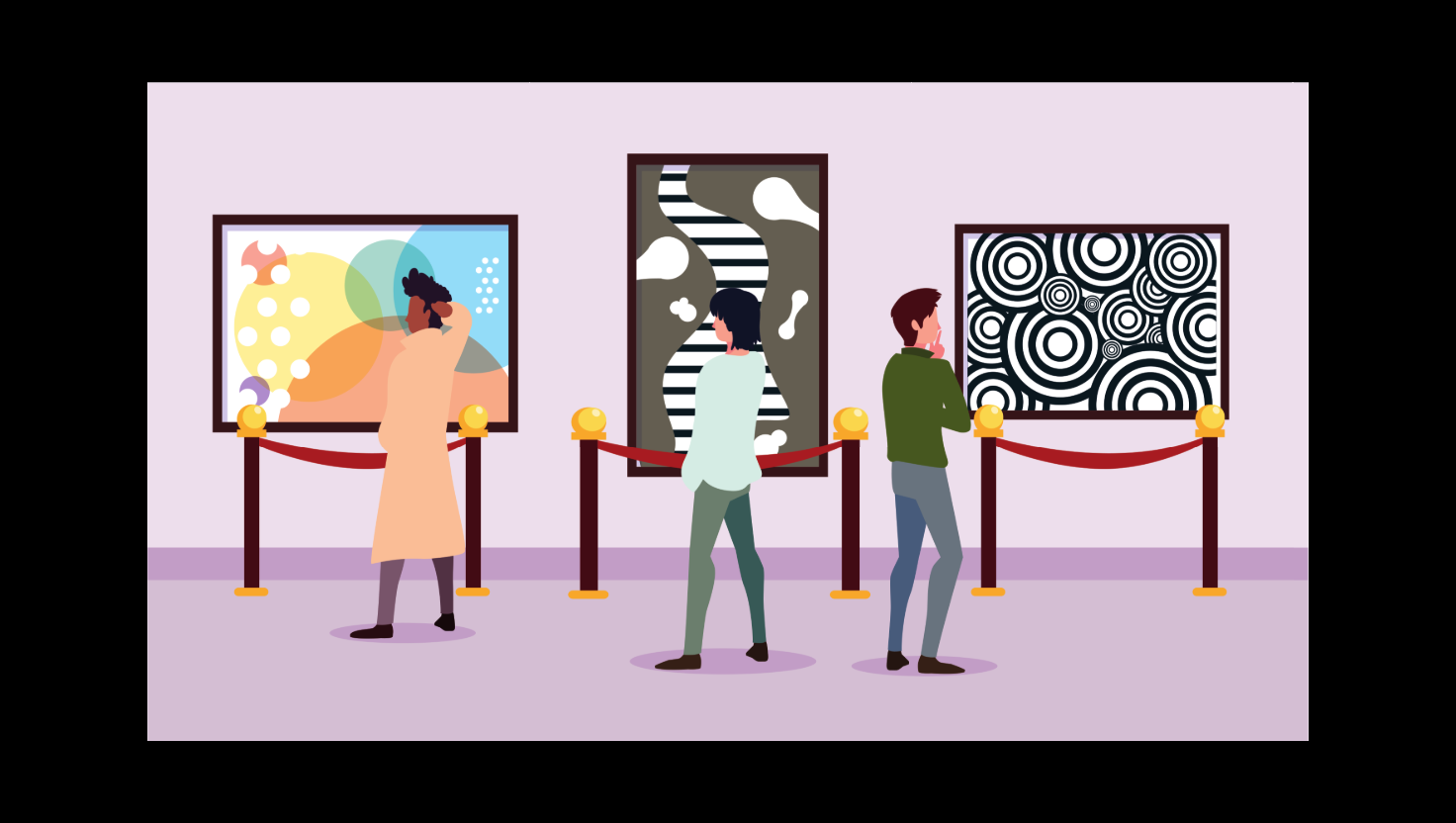
Imagine walking through an art gallery.
You move from one painting to another.
You observe.
You think.
You discuss.
You make connections.
A Gallery Walk brings this same experience into the classroom.
Students move around the room, visiting different learning stations, charts, questions, problems, or student-created work.
Instead of learning from a single source, they learn from multiple perspectives.
The classroom becomes a learning museum.
Why Gallery Walk Works
The human mind loves movement.
When students move physically, their attention often improves.
When students interact with different ideas, learning becomes more dynamic.
Gallery Walk combines:
- Movement
- Observation
- Discussion
- Reflection
- Collaboration
Instead of passive learning, students become active participants in the learning process.
A Classroom Example
Imagine you are teaching Climate Change in a Grade 8 classroom.
Place five charts around the room:
Station 1
Causes of Climate Change
Station 2
Effects on the Environment
Station 3
Effects on Human Life
Station 4
Possible Solutions
Station 5
What Students Can Do
Divide students into groups.
Each group spends a few minutes at each station.
They discuss ideas.
Write observations.
Respond to questions.
Then move to the next station.
By the end of the activity, students have explored the topic from multiple angles.
Learning becomes active and memorable.
The Benefits of Gallery Walk
1. Increases Student Engagement
Students are no longer passive listeners.
Movement keeps energy levels high.
2. Encourages Collaboration
Students discuss ideas and learn from one another.
3. Supports Different Learning Styles
Visual learners, auditory learners, and kinesthetic learners all benefit.
4. Develops Critical Thinking
Students analyze information from multiple perspectives.
5. Makes Learning Memorable
Students remember experiences more than lectures.
Gallery Walk Across Subjects
Science
Display different experiments, diagrams, or scientific phenomena.
Mathematics
Place different problem-solving strategies at each station.
Social Science
Explore historical events, maps, and case studies.
English
Analyze characters, themes, quotations, and writing samples.
Artificial Intelligence
Create stations on AI applications, ethics, opportunities, risks, and future careers.
The possibilities are endless.
How to Conduct a Gallery Walk
Step 1: Prepare Learning Stations
Create charts, questions, images, case studies, or tasks.
Step 2: Divide Students into Groups
Small groups work best.
Step 3: Set a Time Limit
3–5 minutes per station is usually sufficient.
Step 4: Encourage Discussion
Students should discuss before recording responses.
Step 5: Rotate Groups
Move clockwise to the next station.
Step 6: Reflect
End with a class discussion or reflection activity.
Reflection is where learning becomes meaningful.
Common Mistakes Teachers Make
Too Much Information
Keep each station focused and simple.
No Clear Instructions
Students should know exactly what is expected.
Insufficient Time
Allow enough time for discussion and thinking.
Skipping Reflection
The final reflection helps students connect their learning.
The Teacher’s New Role
During a Gallery Walk, the teacher is not standing at the front delivering information.
The teacher becomes:
- A facilitator
- An observer
- A guide
- A learning designer
The teacher creates the experience and supports students as they explore.
A Reflection for Every Teacher
Think about your classroom.
How often do students move while learning?
How often do they interact with ideas instead of simply receiving them?
Children are naturally curious.
They love to explore.
They love to discover.
Perhaps learning becomes powerful when we allow students to learn the way they are naturally designed to learn.
A Simple Challenge
This week, choose one topic from your syllabus.
Create four learning stations.
Allow students to move, discuss, and explore.
Observe the difference.
Observe the energy.
Observe the conversations.
Observe the learning.
You may discover that when students move through knowledge, knowledge begins to move within them.
Final Thoughts
Education is not about keeping students seated.
Education is about keeping minds active.
Gallery Walk transforms the classroom from a place of information delivery into a place of exploration.
Students become investigators.
Observers.
Thinkers.
Collaborators.
And perhaps most importantly, learners who are fully engaged.
A classroom should not feel like a waiting room.
It should feel like a journey of discovery.
Gallery Walk is one step in that direction.
Reflection Question
If you were to create a Gallery Walk tomorrow, what topic would you choose and why?
Share your ideas in the comments and inspire fellow educators.


Most needful information…. Thank you sir
Creative ideas for classroom management.