
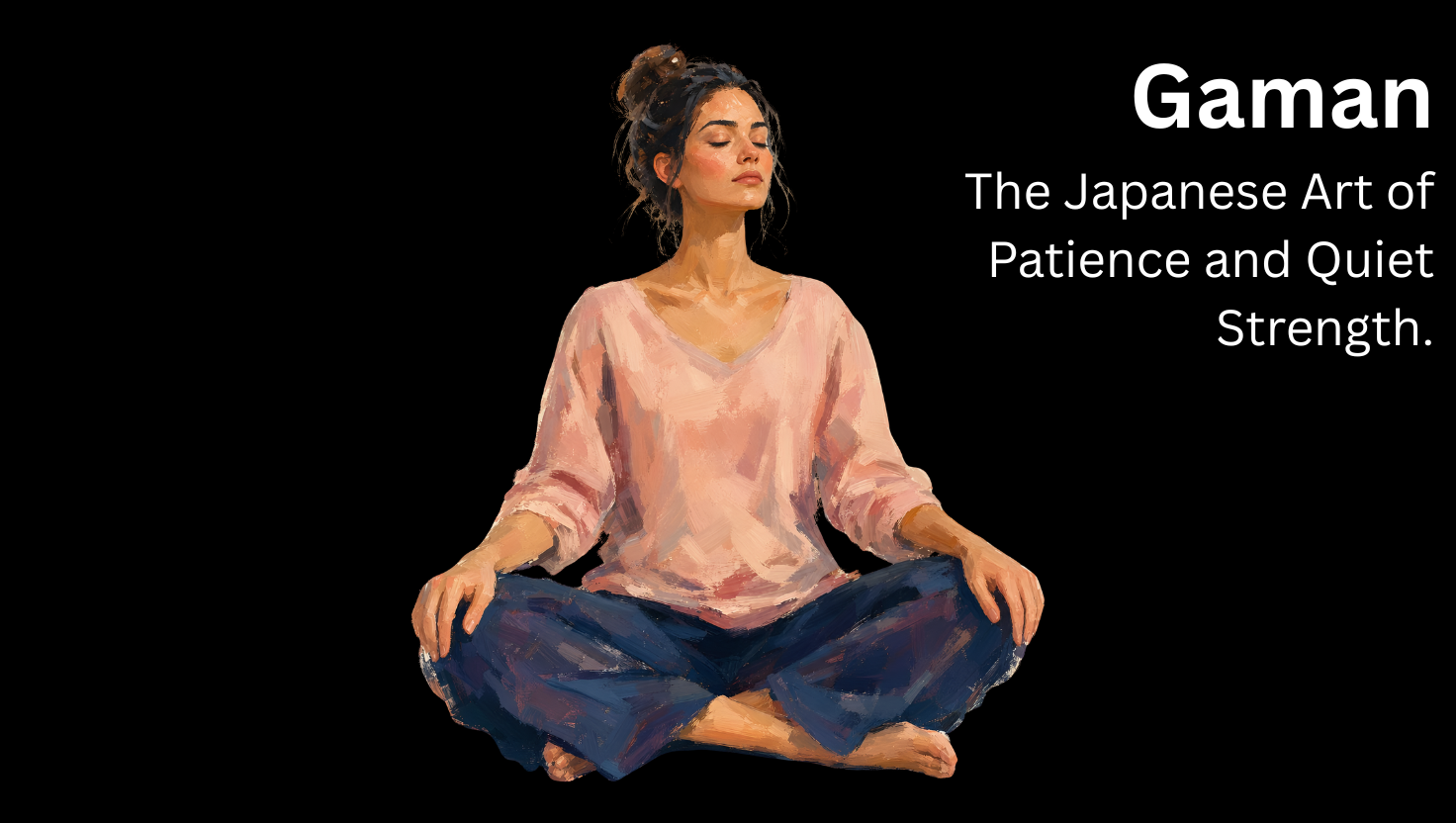
Gaman: The Japanese Art of Patience and Quiet Strength
“The strongest teacher is not the one who controls the classroom. It is the one who first learns to control themselves.”
What Happens When Everything Goes Wrong?
Imagine this.
You arrive at school with a beautifully prepared lesson.
The projector doesn’t work.
Half the class has forgotten their notebooks.
Two students begin arguing.
A parent is waiting outside the classroom.
The principal announces a classroom observation.
Before lunch, you receive another responsibility.
By the end of the day…
You feel completely exhausted.
Now let me ask you a question.
Did the situation make you tired?
Or…
Did your reaction to the situation make you tired?
There is a subtle difference.
The Japanese have a beautiful philosophy called Gaman.
It means enduring difficult situations with patience, dignity, self-control, and inner strength.
It is not about suppressing emotions.
It is about choosing wisdom over reaction.
Perhaps this is one of the greatest qualities a teacher can develop.
Children Learn More from Our Reactions Than Our Lessons
Think about a classroom.
Students are always watching.
Not only when you teach.
But when something unexpected happens.
How do you react when a child makes a mistake?
How do you respond when technology fails?
How do you behave when someone disagrees with you?
Children quietly learn emotional intelligence from these moments.
Sometimes…
The greatest lesson is not in the textbook.
It is in the teacher’s response.
The Bamboo and the Storm
During a storm…
The strongest-looking tree sometimes breaks.
The bamboo bends.
It does not fight the wind.
It does not panic.
It adapts.
And when the storm passes…
It stands again.
Teaching is similar.
Every academic year brings storms.
Examinations.
Complaints.
Deadlines.
Unexpected challenges.
A teacher who learns to bend without breaking becomes stronger every year.
Five Ways Teachers Can Practise Gaman
1. Pause Before Responding
When something goes wrong…
Do not react immediately.
Take one slow breath.
Then respond.
One deep breath has prevented countless unnecessary arguments.
Calmness begins with a pause.
2. Separate the Child from the Behaviour
A child may behave inappropriately.
That does not make the child a bad person.
Correct the behaviour.
Never attack the child’s identity.
Children improve when they feel respected.
3. Listen Before Defending Yourself
Sometimes a parent arrives with strong emotions.
The natural tendency is to explain immediately.
Instead…
Listen.
Many parents calm down simply because someone listened sincerely.
Listening is not weakness.
It is leadership.
4. Focus on Solutions
Every school has problems.
Great teachers ask,
“What can we do now?”
Instead of,
“Who is responsible?”
Solutions create progress.
Complaints create exhaustion.
5. Protect Your Inner Balance
Not every problem deserves to enter your heart.
A difficult conversation should remain in the school diary…
Not in your mind throughout the night.
Reflect.
Learn.
Move forward.
Peace is a professional strength.
Something I Have Realised
Over many years, I noticed something remarkable.
The teachers who earned the deepest respect were rarely the loudest.
They remained calm during Annual Day.
They remained calm during inspections.
They remained calm during PTMs.
Not because they had fewer problems.
But because they had developed greater inner stability.
Leadership begins with emotional balance.
The Classroom Is Watching
Imagine two teachers.
Both face the same challenge.
One raises their voice.
The other lowers it.
One blames.
The other guides.
One reacts.
The other reflects.
Which classroom feels safer?
Children flourish where adults create emotional safety.
The Difference Between Patience and Silence
Sometimes teachers misunderstand patience.
Patience does not mean accepting everything.
If something is unfair…
Speak respectfully.
If a child needs correction…
Correct firmly.
If a concern must be discussed…
Discuss it professionally.
Gaman is not silence.
It is responding without losing your dignity.
Strength and kindness can exist together.
A Seven-Day Gaman Challenge
For the next week…
Whenever something unexpected happens…
Practise this simple habit.
Pause.
Take one deep breath.
Ask yourself:
“What response will help this situation, not worsen it?”
Then act.
Observe how different your day becomes.
The Quiet Strength of a Teacher
Children will not remember every worksheet.
Parents will not remember every PTM.
But they will remember one thing.
The teacher who remained calm when everyone else became anxious.
Calmness builds trust.
Trust builds relationships.
Relationships build learning.
Final Reflection
Life will never become free from challenges.
Neither will teaching.
There will always be another examination.
Another inspection.
Another difficult conversation.
Another unexpected responsibility.
If our peace depends on everything going perfectly…
We will rarely experience peace.
But if our peace comes from within…
No classroom challenge can take it away.
The purpose of Gaman is not to make teachers stronger than others.
It is to make teachers stronger than yesterday.
Because every child deserves one adult who responds with wisdom instead of anger.
Perhaps…
That adult can be us.
🌿 This Week’s Teacher Challenge
For the next seven school days…
Whenever you feel stressed…
Follow this simple practice.
STOP
S – Stop.
T – Take one deep breath.
O – Observe your thoughts.
P – Proceed with wisdom.
Practise this before speaking.
Before correcting.
Before replying.
Small pauses create powerful teachers.
Reflection Question
Think about the last difficult situation you faced in school.
If you could respond again today…
What would you do differently?
Share your thoughts in the comments.
Your reflection may help another teacher discover the strength of calmness.
Regards
Praveen Athinagaram
Click here to follow me on YouTube
Click here to follow me on WhatsApp
Click here to follow me on Facebook