
Don’t teach for the examination. Teach in such a way that the examination becomes a natural outcome of learning.
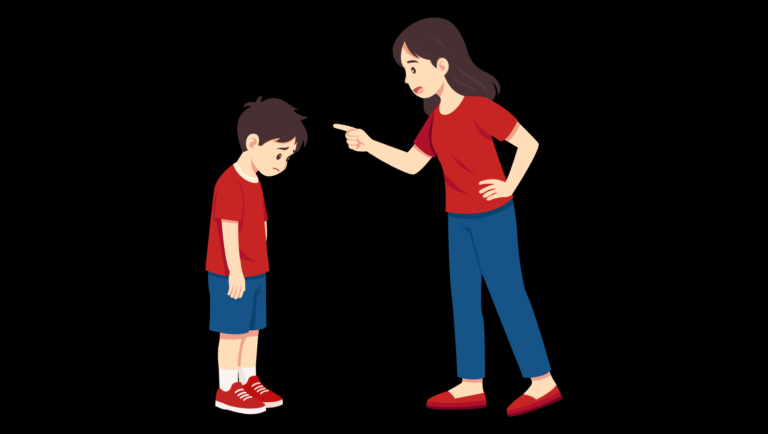
Today, after the half-yearly examination, many teachers may be carrying a little disappointment.
We completed the syllabus.
We revised.
We conducted tests.
We worked hard.
Yet some children wrote very little.
Some left pages blank.
Some could not even understand what the question was asking.
And when the marks came, we felt:
“What more can we do?”
Perhaps we should pause here.
Because sometimes, when something is not working, the answer is not more effort.
The answer is a different approach.
Don’t Look at the Marks. Look at the Child Behind the Marks.
A mark is only a number.
Behind that number is a child.
If a child gets 35 marks, don’t immediately ask:
“Why did this child score only 35?”
Ask:
“Where did the child lose the ability to learn?”
Could the child read the question?
Could the child understand it?
Could the child remember the concept?
Could the child put the thought into words?
Could the child manage time?
This is where a teacher’s real work begins.
The answer sheet is not merely an examination paper. It is a mirror.
It shows us where the child needs us.
Don’t Try to Change 45 Children
This is important.
If you have 45 students in your classroom, don’t make your teaching more complicated.
You don’t need 45 individual lesson plans.
You need one simple habit that reaches 45 children.
For the next six months, do something very simple.
Every day, take one question.
Write it on the board.
And before asking:
“What is the answer?”
Ask:
“What is this question asking you?”
Let them think.
Let two or three children explain.
Then let everyone write.
Five minutes.
That’s all.
Do it again tomorrow.
And the day after.
Repetition creates ability.
Stop Giving More Tests. Start Learning From Tests.
A test is useful only if it changes what happens next.
Suppose 20 students make the same mistake.
Don’t correct 20 notebooks separately and forget about it.
Bring that mistake back to the classroom.
Say:
“Many of us made this mistake. Let’s understand it together.”
Now the mistake has become a teacher.
This is the beauty of observation.
A conscious teacher does not simply correct mistakes. A conscious teacher studies them.
Give Children One Small Victory Every Week
Many children who perform poorly begin to carry an invisible sentence inside them:
“I am not good at studies.”
Don’t fight this sentence with a lecture.
Give the child an experience that contradicts it.
Maybe this week:
“I answered five questions correctly.”
Next week:
“I completed the paper on time.”
Then:
“I understood this chapter.”
Small victories create something powerful.
The child begins to believe, “Maybe I can.”
Once a child believes I can, learning becomes much easier.
Don’t Make Marks the Enemy
We sometimes speak as if marks and understanding are opposites.
They are not.
A child should understand.
A child should learn.
And a child should also learn how to express that understanding in an examination.
Marks matter.
But marks should be the result of learning, not the substitute for learning.
So teach the child:
Understand → Remember → Think → Write → Check.
Do this repeatedly.
Eventually, the examination becomes less frightening because the child has practised the process.
And Teacher, Don’t Lose Yourself
There is another important thing.
When results are poor, teachers often blame themselves.
“Maybe I didn’t teach well.”
Perhaps you did your best with the method you knew.
Now you know a little more.
So change something.
A good teacher is not someone whose first method always works.
A good teacher is someone who observes, learns and changes.
The child is learning the subject.
You are learning how to teach the child.
Both of you are growing.
Your Six-Month Practice
Don’t create a huge new workload.
Just remember these four things:
Every day
One question. Five minutes.
Teach children to understand what the question is asking.
Every week
One short test.
Not to frighten them—to discover what they need.
After every test
Find one common mistake.
Teach that mistake to everyone.
Every month
Look at the progress.
Not only the highest marks.
Look at:
- fewer blank answers,
- better question understanding,
- better writing,
- more attempts,
- fewer repeated mistakes.
These are signs of learning.
Then Something Beautiful May Happen
Six months from now, the child who once looked at a question paper and thought:
“I don’t know anything.”
may look at it differently.
They may read the question.
Underline the keyword.
Think.
Write something.
Check the answer.
Move to the next question.
Perhaps the marks will rise.
But more importantly, the child will have changed.
And when a child changes, marks often follow.
One Question for Every Teacher
Tomorrow, when you enter your classroom, don’t ask:
“How much syllabus do I have left?”
Ask:
“How much learning can I create today?”
Don’t try to transform the entire class tomorrow.
Take one question.
One habit.
One small improvement.
And repeat it.
Because education is not transformed by one extraordinary lesson.
It is transformed by ordinary teachers doing the right things consciously, every single day.
🌱 For the next six months:
Teach less mechanically.
Observe more deeply.
Practise consistently.
Correct intelligently.
And give every child the experience of saying:
“Yes. I can do this.”
That may be the most powerful preparation for the annual examination.